

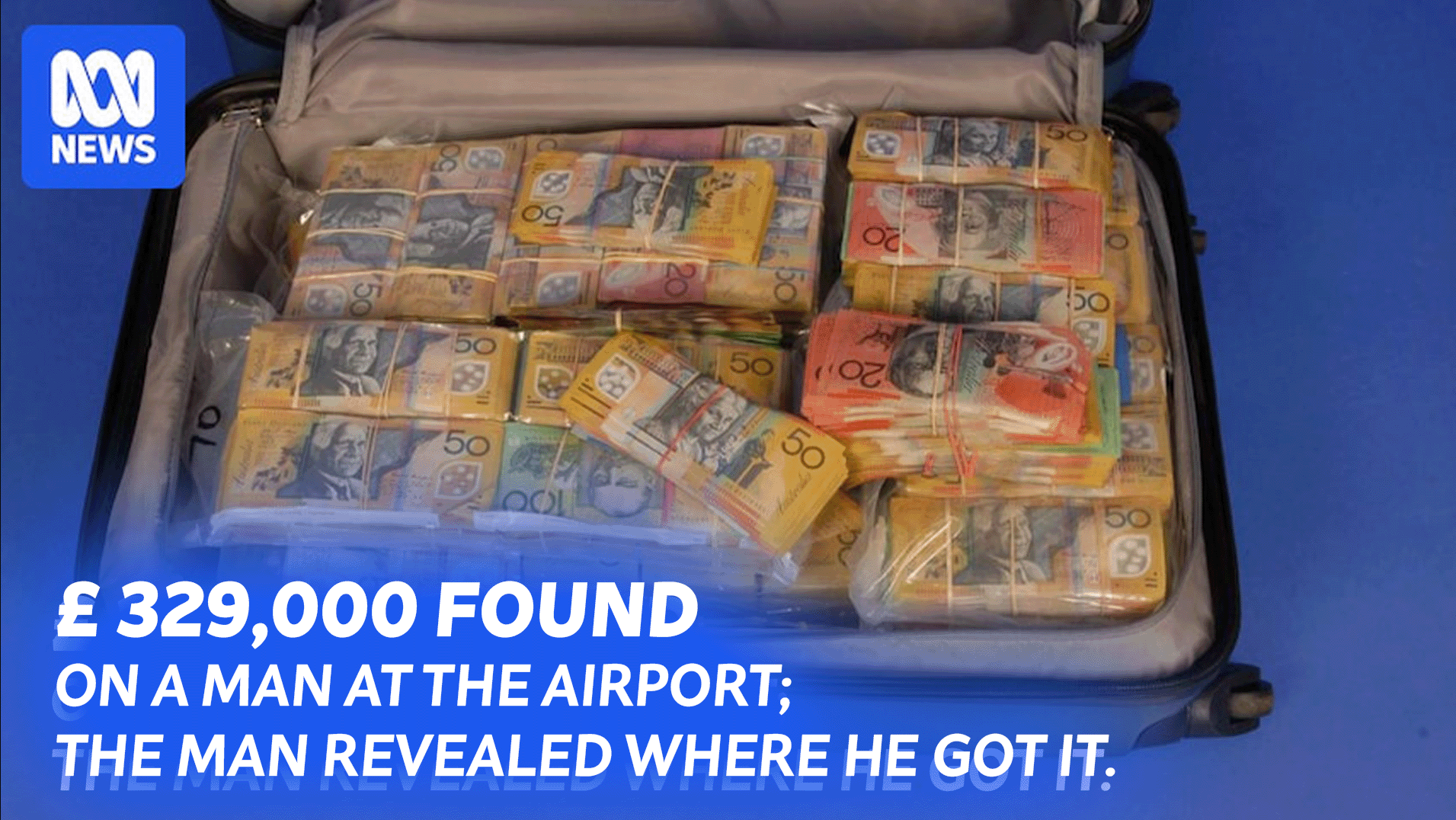
Police in Bosnia and Herzegovina have detained a man after officers allegedly discovered £329,000 in cash during a security inspection at an airport.
The incident, which immediately drew attention from financial investigators and customs authorities, is now part of a wider investigation into the movement of undeclared money across European borders.
Routine Inspection Leads to Major Discovery
According to preliminary reports, the man was stopped during a routine airport control procedure. During the inspection of his luggage, officers reportedly uncovered multiple packages containing large amounts of cash.
Witnesses at the airport described a heavy police presence as authorities secured the area and began documenting the contents of the bags.
The suspect was detained for questioning shortly after the discovery.
Why Large Cash Transfers Raise Concerns
Under European financial regulations, transporting significant amounts of money across borders is not necessarily illegal. However, travelers are generally required to declare large sums of cash to customs authorities.
Undeclared cash movements can trigger investigations related to:
- Money laundering
- Tax evasion
- Underground banking systems
- Organized financial crime
Investigators are often less interested in the amount itself and more focused on the origin and intended destination of the funds.
Europe’s Focus on the “Money Trail”
Across Europe, financial crime investigations are increasingly centered on traceability.
Authorities now examine:
- Travel patterns
- Financial records
- Source-of-funds documentation
- Cross-border connections
- Communication and transaction history
According to anti-money laundering specialists, unexplained cash transportation remains one of the key warning signs in international financial investigations.
Cash Couriers Under Growing Scrutiny
Law enforcement agencies throughout Europe have intensified monitoring of so-called “cash couriers” — individuals who physically transport large sums of money between countries.
Experts say cash is often used because it is harder to trace than digital banking transactions. However, modern customs systems and financial intelligence cooperation have made cross-border cash movement increasingly difficult to hide.
The European Union has strengthened reporting requirements and information sharing between customs and financial authorities in recent years.
Investigation Still Ongoing
At this stage, authorities have not publicly confirmed:
- Where the money came from
- Why it was being transported
- Whether criminal charges will be filed
Officials say the investigation remains active while financial records and travel data are reviewed.
A Sign of Europe’s Changing Financial Landscape
The case reflects a broader shift happening across Europe’s financial system.
In the past, large amounts of cash alone attracted attention. Today, regulators are increasingly focused on whether the story behind the money can be verified through documents, tax records, and transparent financial activity.
As anti-money laundering systems evolve, authorities are no longer simply counting cash.
They are following the trail behind it.
Sources
- European Commission — Anti-Money Laundering Framework
https://finance.ec.europa.eu/financial-crime/eu-anti-money-laundering-and-countering-financing-terrorism_en - FATF Guidance on Cash Couriers
https://www.fatf-gafi.org/en/topics/methods-and-trends/cash-couriers.html - Europol Economic Crime Reports
https://www.europol.europa.eu/crime-areas-and-statistics/crime-areas/economic-crime
