

Introduction
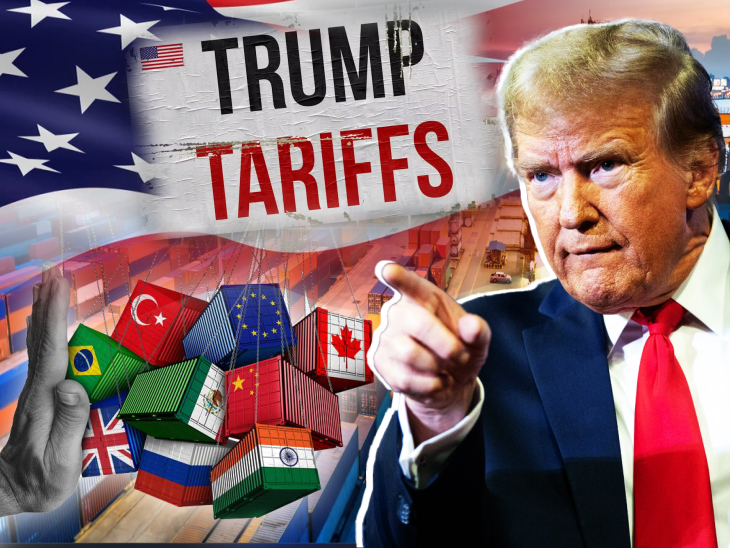
In 2026, global trade tensions have once again become one of the biggest economic stories in the world. After returning to office, President Donald Trump revived one of the most controversial tools from his earlier presidency: tariffs. New import taxes on goods entering the United States have targeted multiple trading partners, including the European Union and the United Kingdom.
For Europe and Britain, the message from Washington has been clear: if trade relations do not move in America’s favor, tariffs will be used aggressively.
This has created a new political and economic challenge on the other side of the Atlantic. European leaders and the British government are now trying to decide how to respond without triggering a full-scale trade war that could hurt consumers, manufacturers, investors, and workers.
The stakes are enormous.
The United States remains one of Europe’s most important export markets. European automakers, machinery companies, pharmaceutical firms, luxury brands, steel producers, and food exporters all depend heavily on American demand. Britain, despite Brexit, is equally exposed because the U.S. remains one of its largest trade partners.
So how exactly are Europe and the United Kingdom planning to respond to Trump’s 2026 tariffs?
And what does it mean for ordinary people in Europe?
This article breaks down the strategy, the politics, the risks, and the likely impact on everyday households.
Chapter 1: What Trump’s 2026 Tariffs Actually Are
Trump’s second-term tariff agenda has moved quickly.
According to multiple reports, the administration introduced a new global tariff regime after legal challenges disrupted earlier emergency tariff structures. A universal 10% tariff was introduced under Section 122 of the Trade Act of 1974, with Trump also signaling a possible increase to 15%. (europarl.europa.eu)
Additional pressure has been placed on allies including the UK. Trump publicly threatened Britain with a “big tariff” unless London removed its Digital Services Tax, which applies to large tech companies. (Reuters)
For Europe, pressure has centered around:
- Industrial goods
- Steel
- Cars
- Pharmaceuticals
- Technology regulation
- Climate-related trade rules
- Agricultural access
The broader goal appears to be forcing concessions while reshaping global supply chains toward U.S. interests.
Chapter 2: Europe’s Response — Strategic, Slow, But Hardening
Unlike the United States, the European Union usually moves through negotiation and consensus. That means Brussels often appears slower than Washington.
But in 2026, the EU response is becoming more serious.
1. Delaying or Reassessing Trade Agreements
The European Parliament’s trade committee reportedly postponed ratification of an EU-U.S. framework agreement because of tariff uncertainty. (europarl.europa.eu)
This signals something important:
Europe may refuse to give Trump symbolic wins while tariffs remain in place.
That means:
- Slower negotiations
- More legal reviews
- Tougher conditions on future deals
- Greater insistence on predictability
2. New Defensive Industrial Policies
The EU recently moved to cut steel imports sharply and impose 50% tariffs on shipments above quotas to protect domestic producers suffering from global overcapacity and U.S. tariff pressure. (Reuters)
This suggests a wider European strategy:
Protect key sectors first, negotiate later.
Industries likely to receive priority include:
- Steel
- EV batteries
- Semiconductors
- Aerospace
- Defense manufacturing
- Green energy equipment
3. Anti-Coercion Tools
Europe has already developed what many call a “trade bazooka” — legal powers allowing countermeasures if another country uses economic pressure.
These tools can include:
- Retaliatory tariffs
- Procurement restrictions
- Investment limits
- Market access penalties
If Trump escalates aggressively, Europe may use them.
4. Diversifying Away from America
Europe is accelerating trade and supply links with:
- Canada
- Japan
- India
- South Korea
- Latin America
- Internal EU supply chains
The logic is simple: reduce dependence on unpredictable U.S. politics.
Chapter 3: Britain’s Response — Different From Europe, But Moving Closer
Britain is in a uniquely difficult position.
Since Brexit, the UK wants strong trade relations with both the EU and the United States. But if Washington becomes more aggressive, London may be forced to choose.
1. Refusing Immediate Capitulation
Trump threatened tariffs unless the UK scrapped its Digital Services Tax. Britain has so far resisted removing it. (theguardian.com)
That suggests Britain does not want to appear weak.
2. Seeking EU Cooperation
Reports show the UK is pursuing closer agreements with the EU on steel and electric vehicles to shield British industry from future shocks. (theguardian.com)
This is one of the most important developments of 2026.
Even after Brexit, Britain increasingly sees Europe as its economic safety net.
3. Building Its Own “Trade Defense” Laws
British business groups have urged the government to create EU-style economic security powers — allowing Britain to respond to coercive tariffs and pressure. (theguardian.com)
That means the UK may soon copy Brussels:
- Faster tariff retaliation
- Supply chain screening
- Strategic subsidies
- National industrial support
4. Quiet Sector Deals
Britain has also secured sector-specific arrangements with Washington, including pharmaceuticals, to protect exports. (Reuters)
This indicates London’s broader approach:
Fight publicly where necessary, compromise privately where useful.
Chapter 4: Why Europe and Britain Are Avoiding a Full Trade War
Many voters assume tariffs are simple punishment tools.
But in reality, trade wars hurt everyone.
If Europe retaliates massively:
- American imports become more expensive in Europe
- European exports face more barriers
- Inflation rises
- Companies delay hiring
- Stock markets weaken
- Consumers lose purchasing power
That is why both Brussels and London are trying a middle path:
Be firm, but not reckless.
They want to show strength without crashing growth.
Chapter 5: What This Means for Ordinary Europeans
This is where politics becomes personal.
1. Prices Could Rise
If tariffs expand, expect higher prices on:
- Electronics
- Cars
- Machinery
- Imported food
- Consumer brands using global supply chains
Even if tariffs target producers, consumers often pay part of the cost.
2. Jobs Could Shift
Export-heavy industries are vulnerable:
- German autos
- Italian machinery
- French luxury goods
- Dutch logistics
- Irish pharmaceuticals
- British finance-linked sectors
Some jobs may be protected by subsidies, others may move.
3. Governments May Spend More
To soften damage, governments may introduce:
- Energy aid
- Industry subsidies
- Tax relief
- Worker support programs
That can help households—but also increases deficits.
4. Investment Uncertainty
Businesses hate unpredictability.
If tariff headlines continue, companies delay:
- Factory expansions
- Hiring
- Wage increases
- New product launches
That slows the broader economy.
Chapter 6: Winners Inside Europe
Not everyone loses in a tariff environment.
Some sectors may benefit.
Domestic Manufacturers
If imports become pricier, local producers gain share.
Defense Industry
A more uncertain alliance system may increase European military spending.
Supply Chain Relocation Zones
Countries like Poland, Czechia, Romania, Portugal, and Spain could attract new factories if firms relocate inside Europe.
Strategic Technology Firms
Europe is pushing “economic sovereignty,” which may support local chip, AI, and battery sectors.
Chapter 7: The Political Impact
Trump’s tariffs are not just economic—they are political.
They may strengthen:
Pro-EU Voices
Many now argue Europe needs more unity, not less.
Industrial Nationalists
Others say each nation should defend itself.
Anti-American Sentiment
If tariffs feel punitive, public anger may rise.
British Reversal Pressure
The more exposed Britain feels, the more pressure grows for closer EU integration.
Chapter 8: What Happens Next in 2026?
Three scenarios are possible.
Scenario 1: Managed Tension
Most likely.
Some tariffs remain, negotiations continue, markets adapt.
Scenario 2: Full Escalation
Worst case.
Tariffs spread to autos, pharma, food, tech. Europe retaliates hard.
Scenario 3: Grand Bargain
Best case.
The U.S., EU, and UK strike a new transatlantic trade settlement.
At the moment, Scenario 1 appears most realistic.
Chapter 9: What Citizens Should Watch Closely
Ordinary Europeans should monitor:
- Car tariffs
- Steel measures
- Tech tax disputes
- Energy prices
- Inflation data
- Employment in export sectors
- EU industrial subsidy announcements
- GBP/EUR/USD currency moves
These indicators will reveal whether this remains politics—or becomes a real household crisis.
Chapter 10: Final Conclusion
Europe and the United Kingdom are responding to Trump’s 2026 tariffs with a mix of caution, preparation, and growing resolve.
They are not rushing into retaliation.
Instead, they are:
- Building defensive trade tools
- Protecting strategic industries
- Deepening regional cooperation
- Diversifying global partnerships
- Negotiating where possible
For ordinary people, the biggest risks are slower growth, higher prices, and job uncertainty.
But the crisis may also push Europe toward something it has often lacked:
greater economic unity and strategic independence.
Trump’s tariff campaign may be designed to pressure Europe.
But it could end up transforming Europe instead.
And if that happens, 2026 may be remembered not just as the year of tariffs—but the year Europe decided to become stronger.
Extended Outlook: Why This Could Change Europe for the Next Decade
Trade shocks often create long-term political change.
The eurozone debt crisis changed fiscal policy.
COVID changed industrial resilience.
The Ukraine war changed defense spending.
Trump’s tariffs may now change trade sovereignty.
That means the true story of 2026 may only be beginning.
Europe’s next decade could be shaped by what happens now.
